The work performed
Listening to teams, field observation, and mapping coffee, information, and responsibility flows. The sprint documented reality, identified friction, and designed processes, control requirements, and the transformation sequence.

Cases and evidence
Three different contexts. One discipline: understand reality before committing to execution. Here, we distinguish diagnosis, design, and operational results.
Valley Coffee · China · Industry
The challenge was to connect operational knowledge to processes, controls, and a decision agenda for the factory's next state.
Listening to teams, field observation, and mapping coffee, information, and responsibility flows. The sprint documented reality, identified friction, and designed processes, control requirements, and the transformation sequence.
An executive view of the current and intended future states, controlled artifacts, and an evidence trail. The archive preserves 14 workstreams and 71 tasks; the delivery portal organizes released materials and the continuity journey.
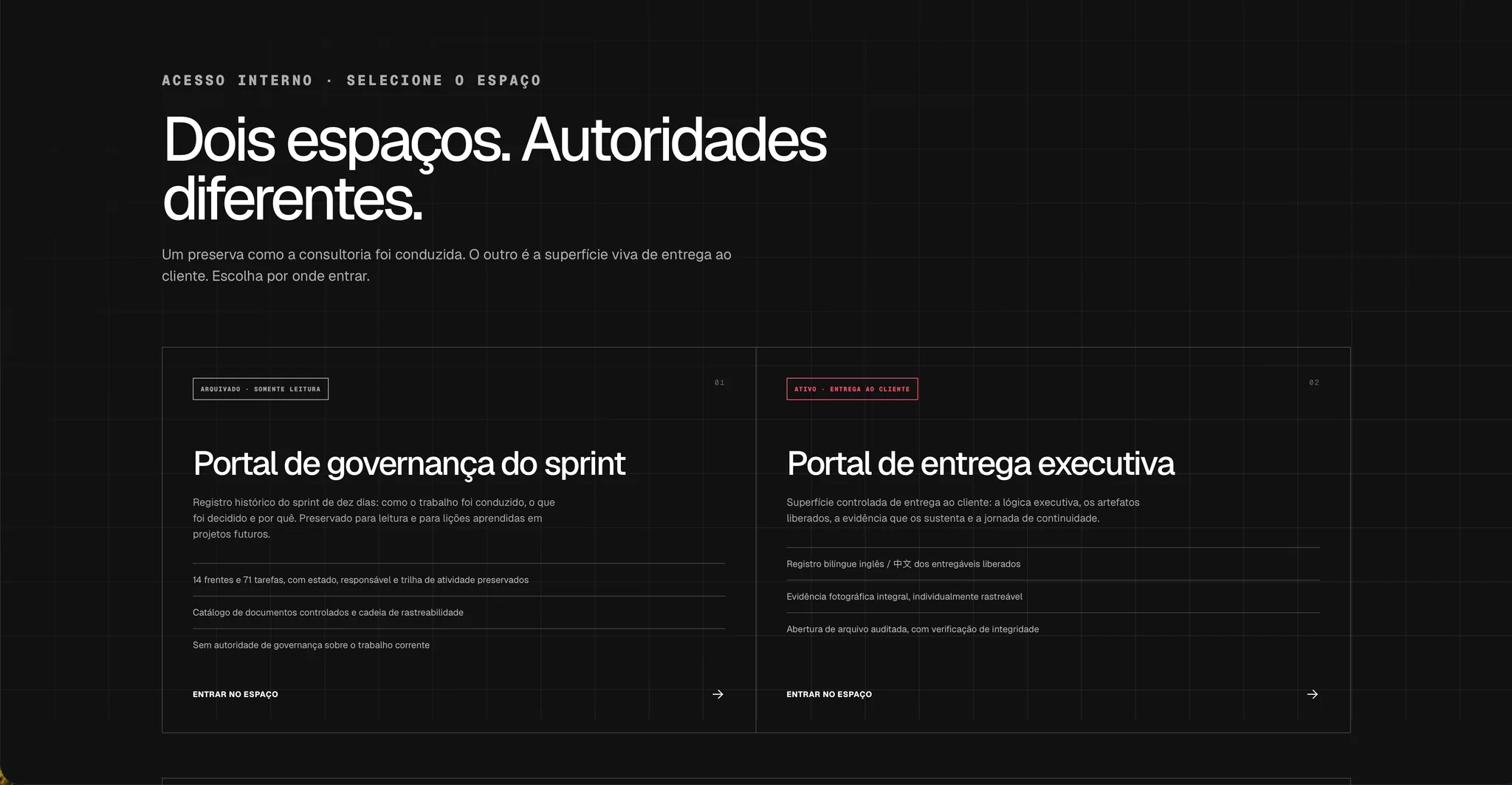
01 / 05 · Two spaces. Different authorities.
The sprint was a diagnosis and design phase. It was not a production pilot or a completed implementation. We do not attribute operational gains to execution that has not yet been demonstrated.
Explore FoundationHachi · Panama and Colombia · Agricultural value chain
An operation connecting lab, field, processing, quality, inventory, and sales cannot be understood function by function alone. The challenge was to make the relationships between these stages visible.
The consulting work connected the realities of the production chain to management, information, and governance needs. Existing knowledge was treated as a starting point, not something to replace.
The structuring of HachiOS within the Panama scope connects processes, responsibilities, and operational information. The lesson is to design the connections before choosing isolated tools.
This case presents the structuring scope and its rationale. It does not disclose confidential data, unverified improvement metrics, or claims of commercial results.
Explore operational transformationPedro Leopoldo · Brazil · Public decision-making
A dry port proposal required an initial foundation to assess whether deeper study was justified. The purpose was to support a decision on next steps, not preempt approval of the project.
Logistics assessment, comparable references, candidate sites, infrastructure, regulatory requirements, and conceptual estimates. Information was organized to clarify possibilities, constraints, and subsequent studies.
Inform the decision before committing resources to a broader study. Applying Foundation's reasoning to a municipal context shows why diagnosis and deeper investigation must be separate decisions.
The preliminary work does not replace a formal feasibility study, licensing, or decisions by competent authorities. It is not equivalent to an approved project, implementation, or verified financial savings.
Explore business diagnosisThe next step
Tell us what needs to change. We'll understand the context and identify the right starting point.